The pitch our strategists give, built around your business.
Tell us what you sell and where. Ava walks you through the full Outbound BDR program, 13 slides, and ties each one back to your company: case studies from your industry, the numbers for your market, and what a program would look like for you. Ask her anything along the way.
- 01How we build, qualify and nurture a list in your market
- 02Results from companies like yours, from our published case studies
- 03Your market's numbers and what a program includes
-
 Slide 1 of 13
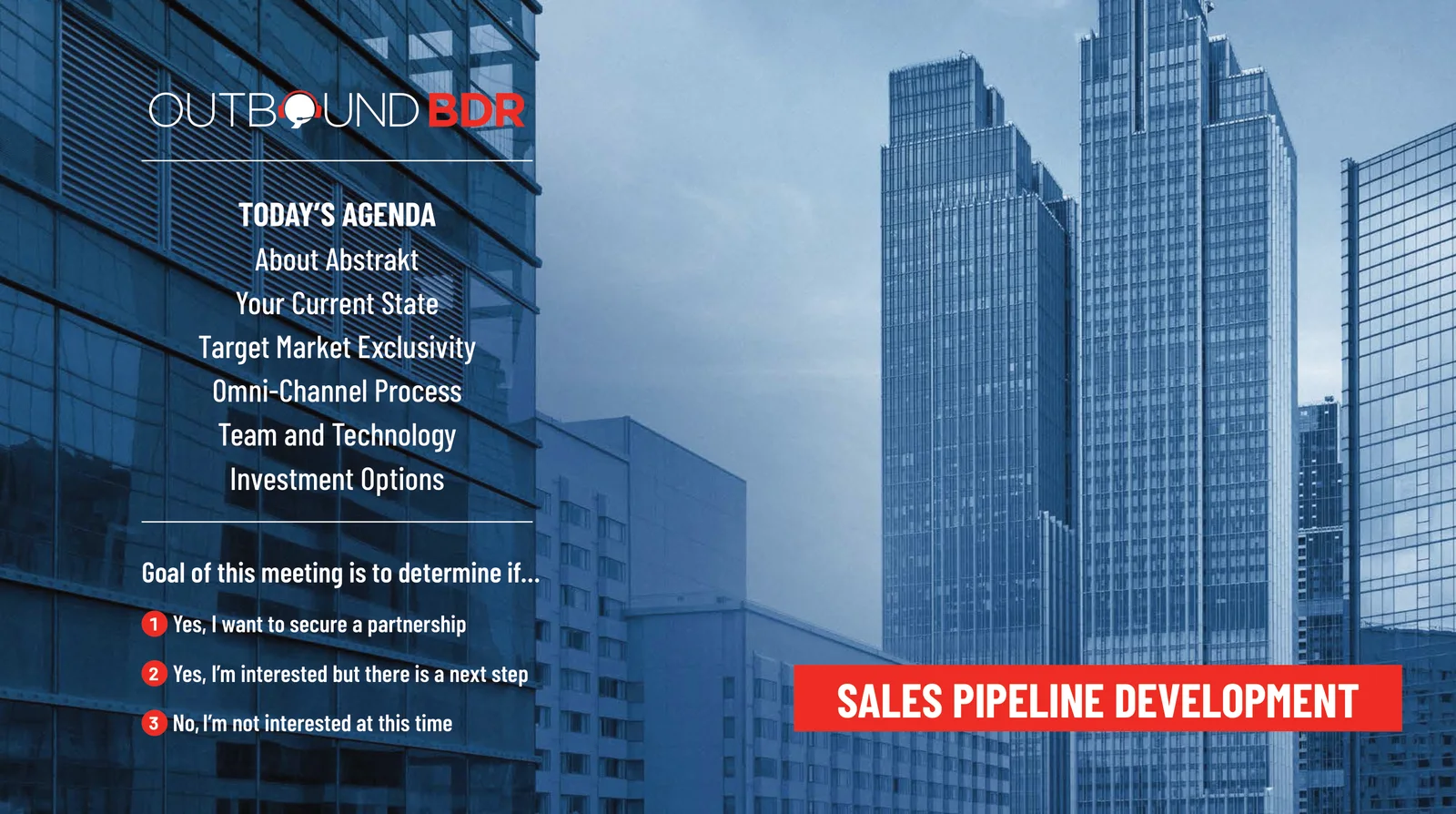
Today's agenda
Hi, I'm Ava. Thanks for taking a few minutes with us. This is the same walkthrough our strategists give in a live meeting, so you can see exactly how we build a predictable sales pipeline. We'll cover who Abstrakt is, how companies like yours grow today, why we work with only one company per market, our omni-channel process, the team and technology behind it, and your investment options. By the end, you should know whether this is a fit: a yes, a yes with a next step, or not right now. All three are fine answers.
-
 Slide 2 of 13
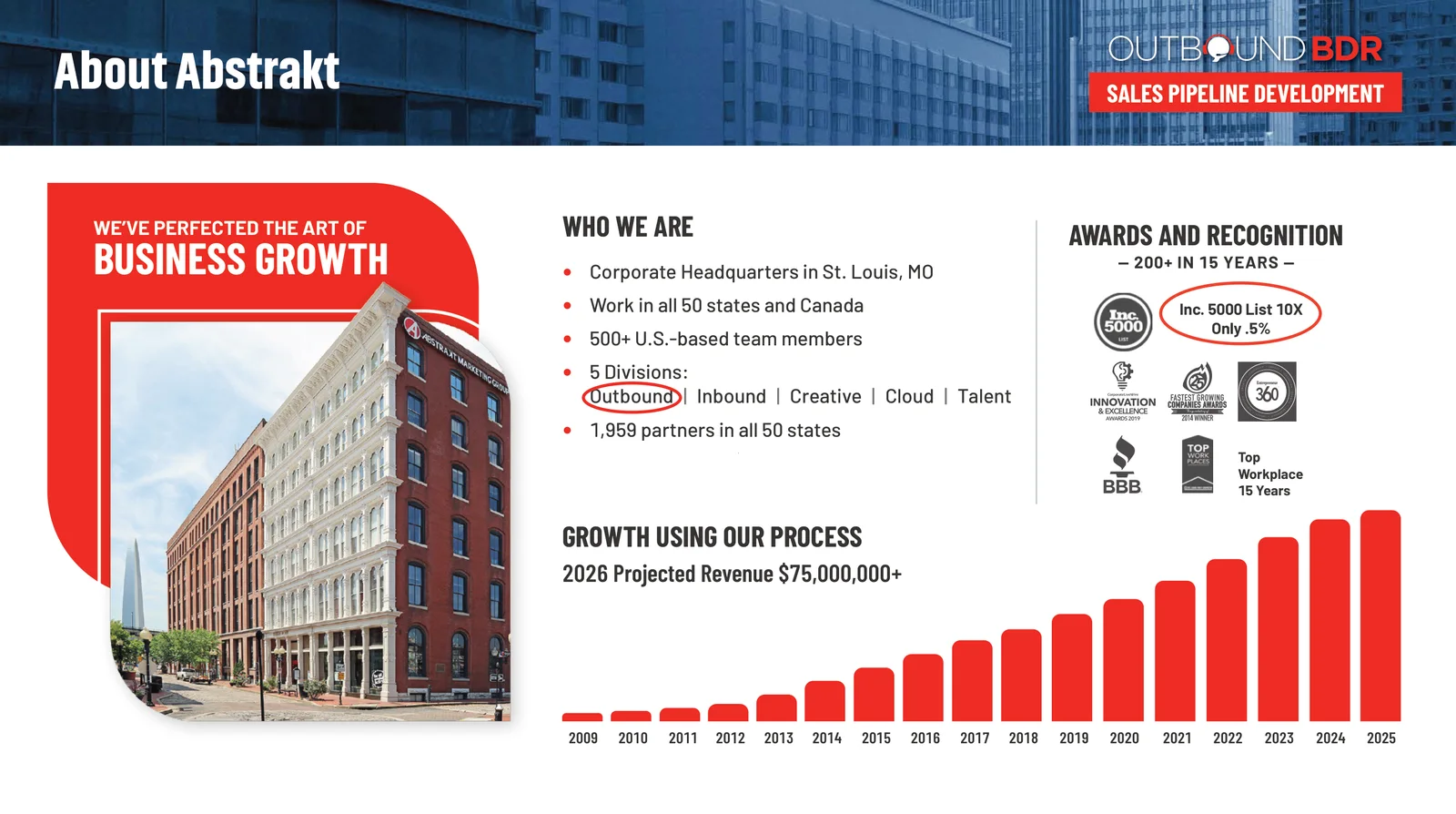
About Abstrakt
A quick word about us. Abstrakt is headquartered in St. Louis and works with partners in all 50 states and Canada. We have more than 500 U.S.-based team members and no offshoring, so the people calling on your behalf sound like your buyers. The growth chart on this slide is us, running the exact process you're about to see, on ourselves. We didn't buy that growth. We built it with this system, so you're not anyone's experiment.
-
 Slide 3 of 13
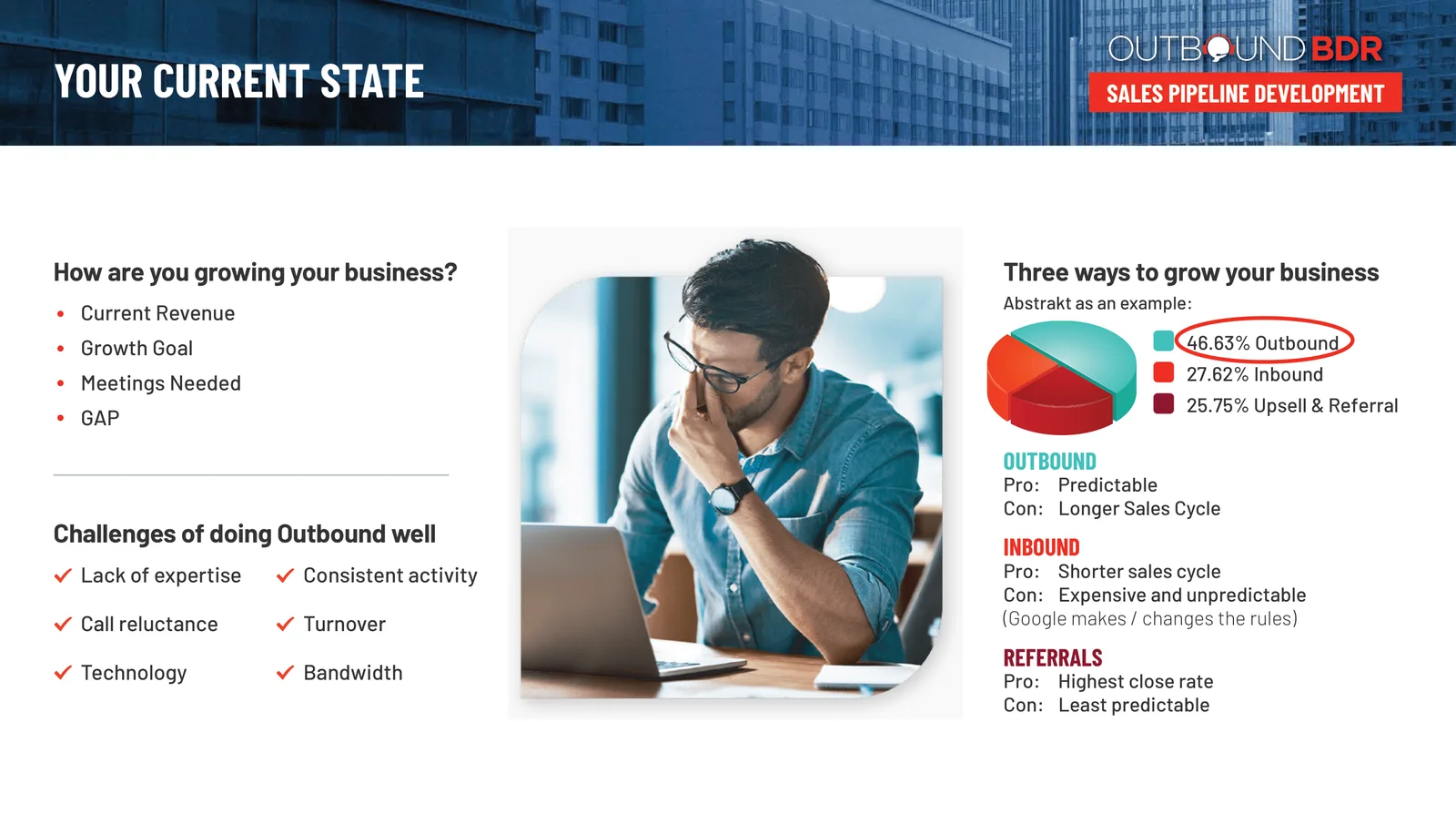
Your current state
There are really three ways a business grows. Referrals have the highest close rate, but you can't turn them up when you need pipeline. Inbound works when buyers come looking, but it's expensive and the rules keep changing. Outbound is the one you can predict and control. The hard part is doing it well: it takes expertise, the right technology, consistent daily activity, and people who don't burn out. Ask yourself how many meetings your revenue goal really requires each month, and whether you have a system that produces them.
-
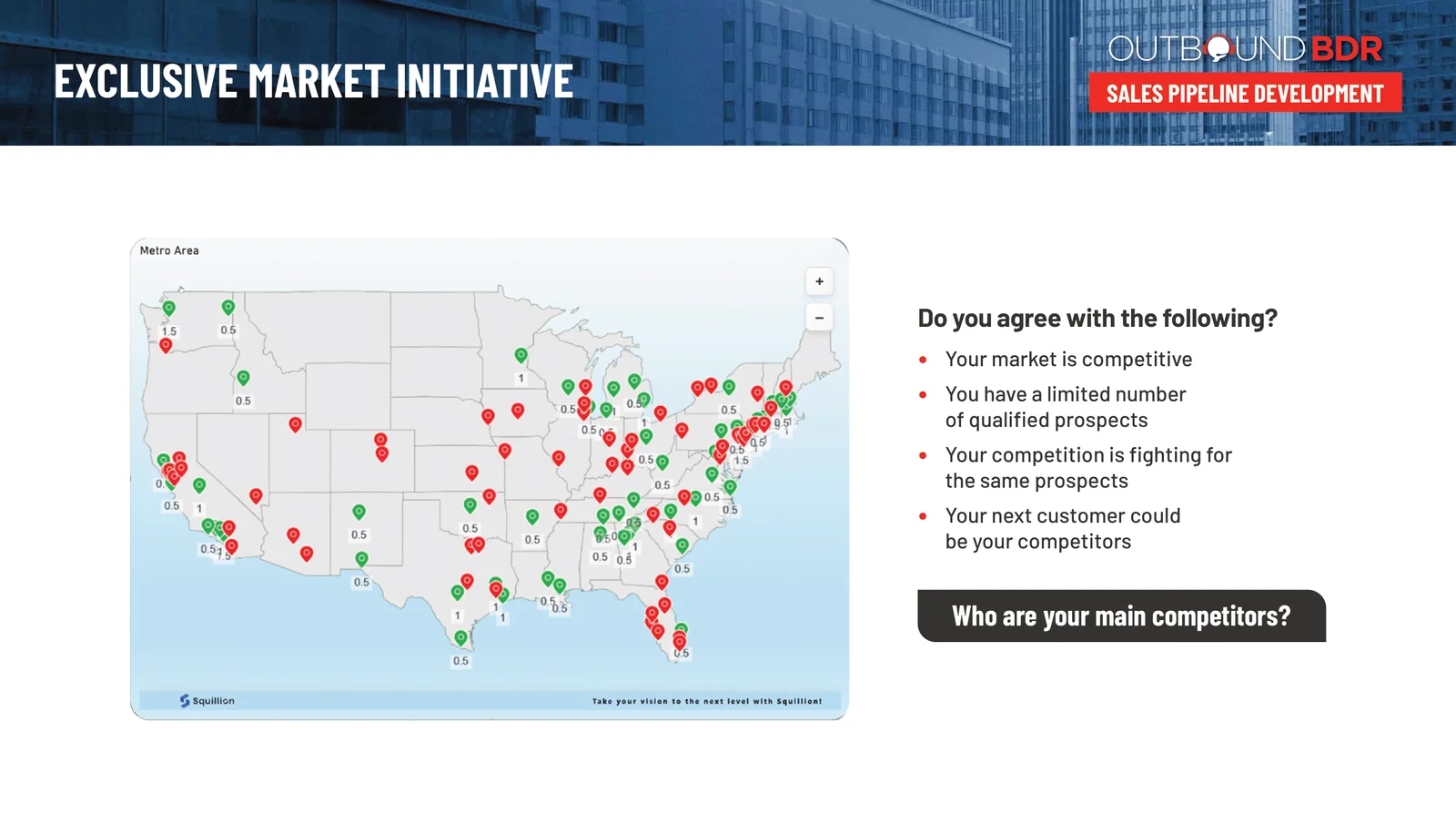 Slide 4 of 13
Exclusive market initiative
We only take one company per market. Think about it: everyone we call on your behalf is probably working with one of your competitors today. If we represented you and five of them, we'd be competing against ourselves. So once a partner commits, that market closes. This map shows markets where we already have partners. If your market is still open, the first company to claim it gets a real, lasting edge. Ask yourself who your main competitors are, and how it would feel if one of them locked up this program first.
-
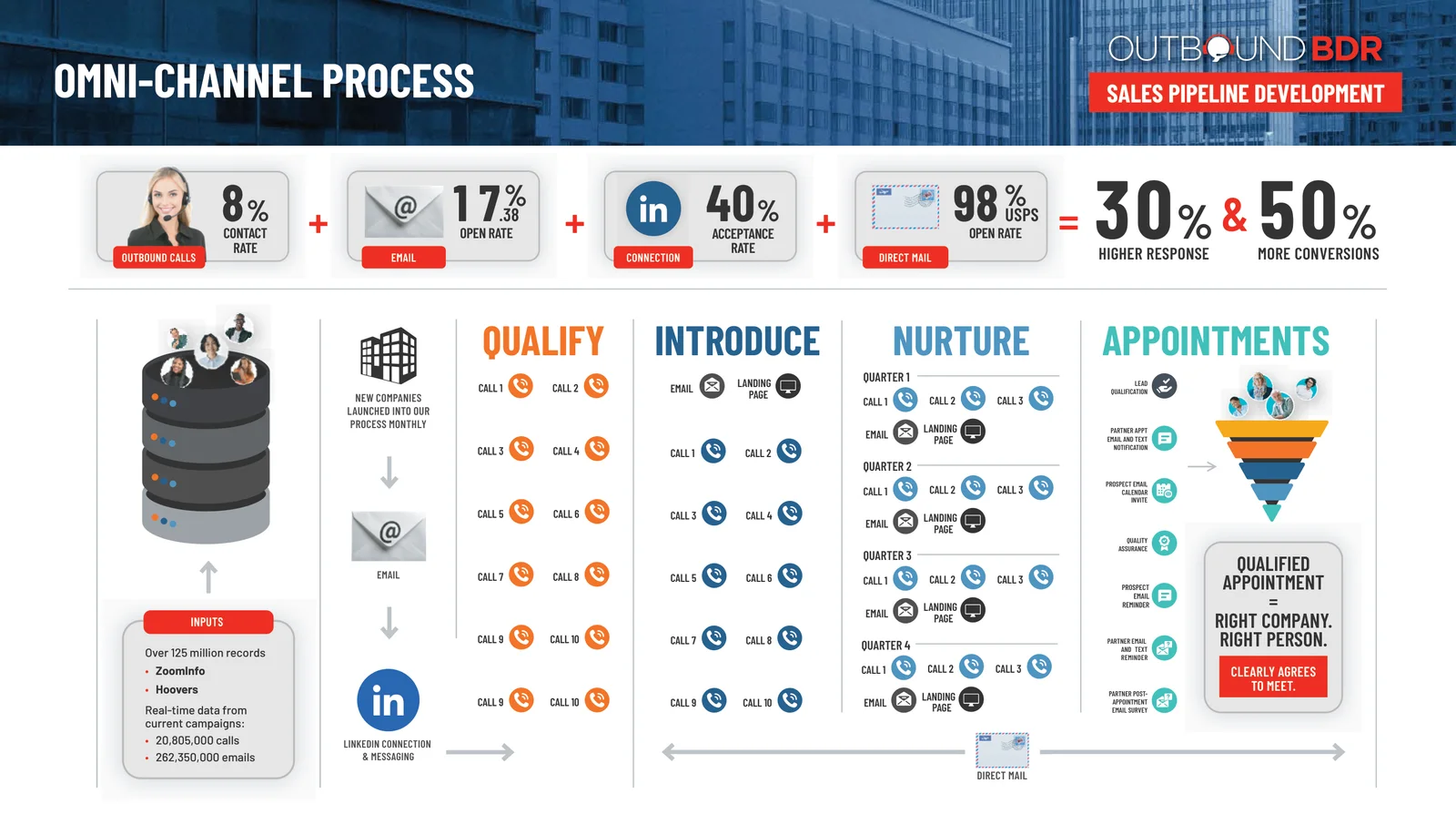 Slide 5 of 13
The omni-channel process
No single channel wins on its own. Calls connect only part of the time, emails get skimmed, LinkedIn requests get ignored, and mail gets opened but not acted on. Stacked together, phone first, with a letter, an email and a LinkedIn touch reinforcing each other, they produce far higher response, because by the time we call, your prospect already knows your name. Under the hood it runs in phases: build the list, qualify, introduce, nurture, and set appointments. Let's walk through each one.
-
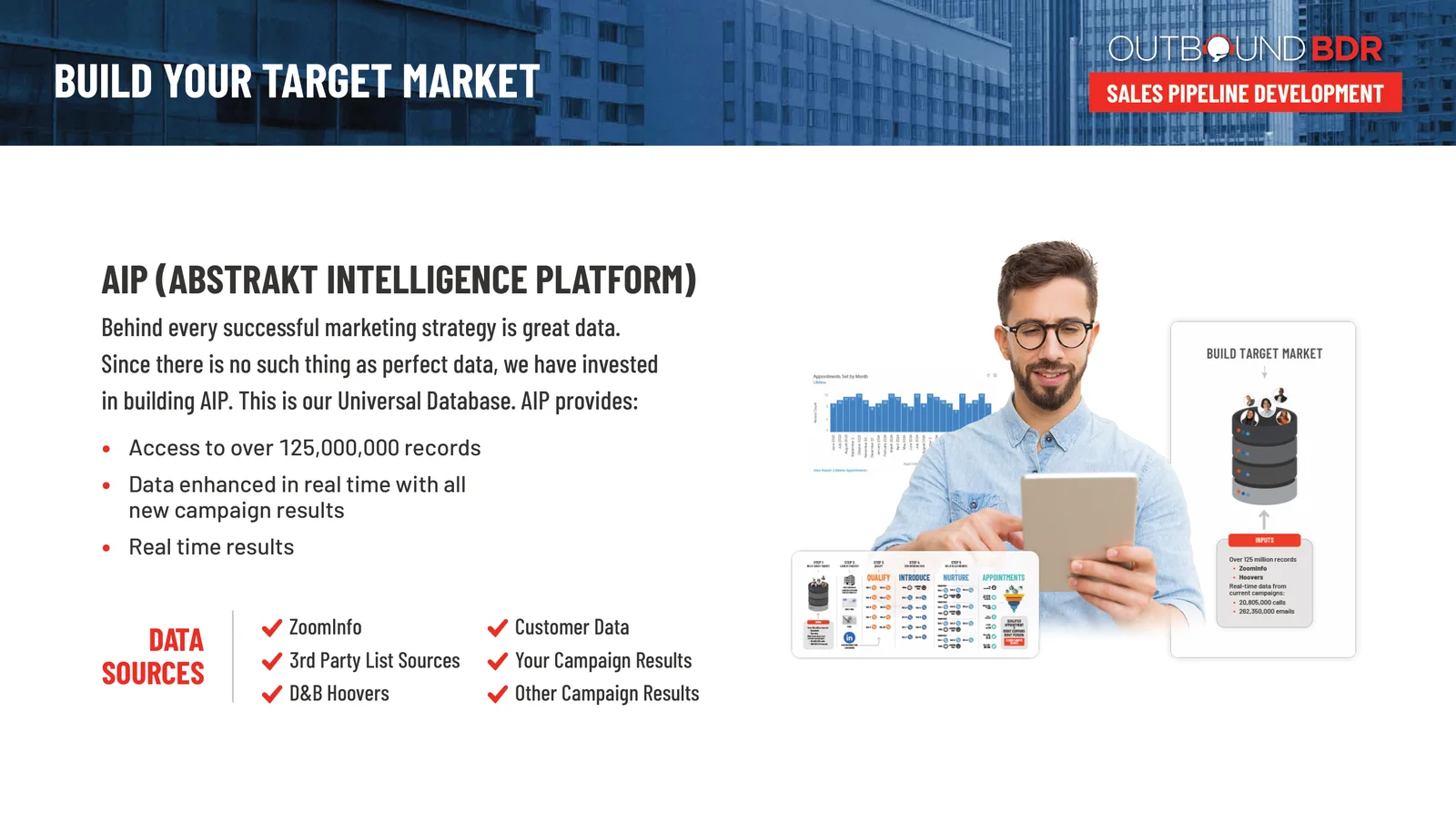 Slide 6 of 13
Build your target market
Everything starts with the list. We define your ideal customer with you: industries, company sizes, geography and the exact titles that buy. Then we build that list from the Abstrakt Intelligence Platform, our universal database, which draws on sources like ZoomInfo and D&B Hoovers along with your own customer data, and gets better with every campaign we run. The best callers in the world can't win working a bad list. Get this part right, and everything downstream gets easier.
-
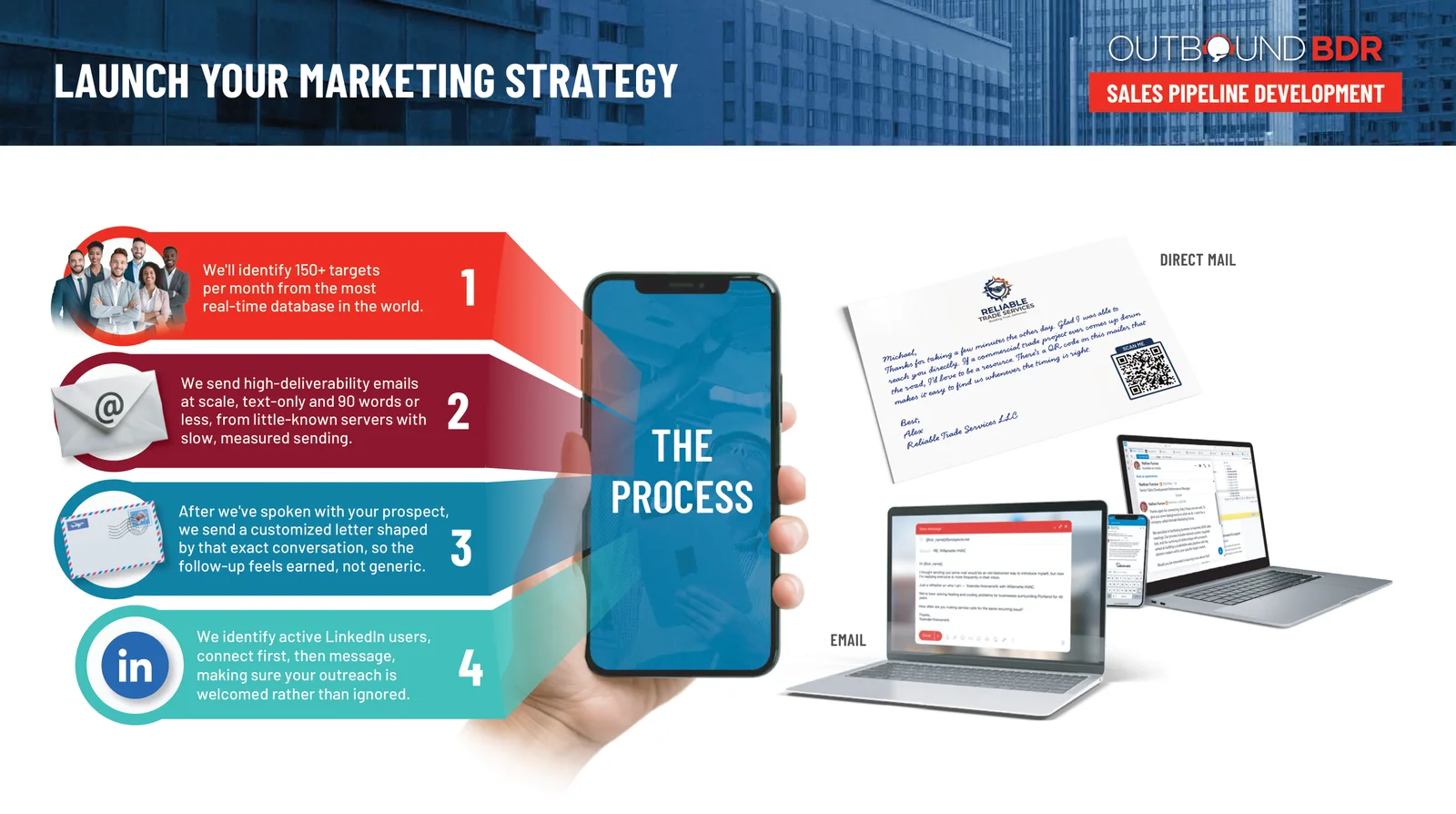 Slide 7 of 13
Launch your marketing strategy
Here's how a campaign launches. Each month we identify new targets from the database. We send short, text-only emails built for deliverability. After we've spoken with a prospect, they get a customized letter shaped by that exact conversation, so the follow-up feels earned, not generic. And we connect with active LinkedIn users first, then message them, so the outreach is welcomed rather than ignored. Every channel supports the phone call.
-
 Slide 8 of 13
Qualify target companies and decision-makers
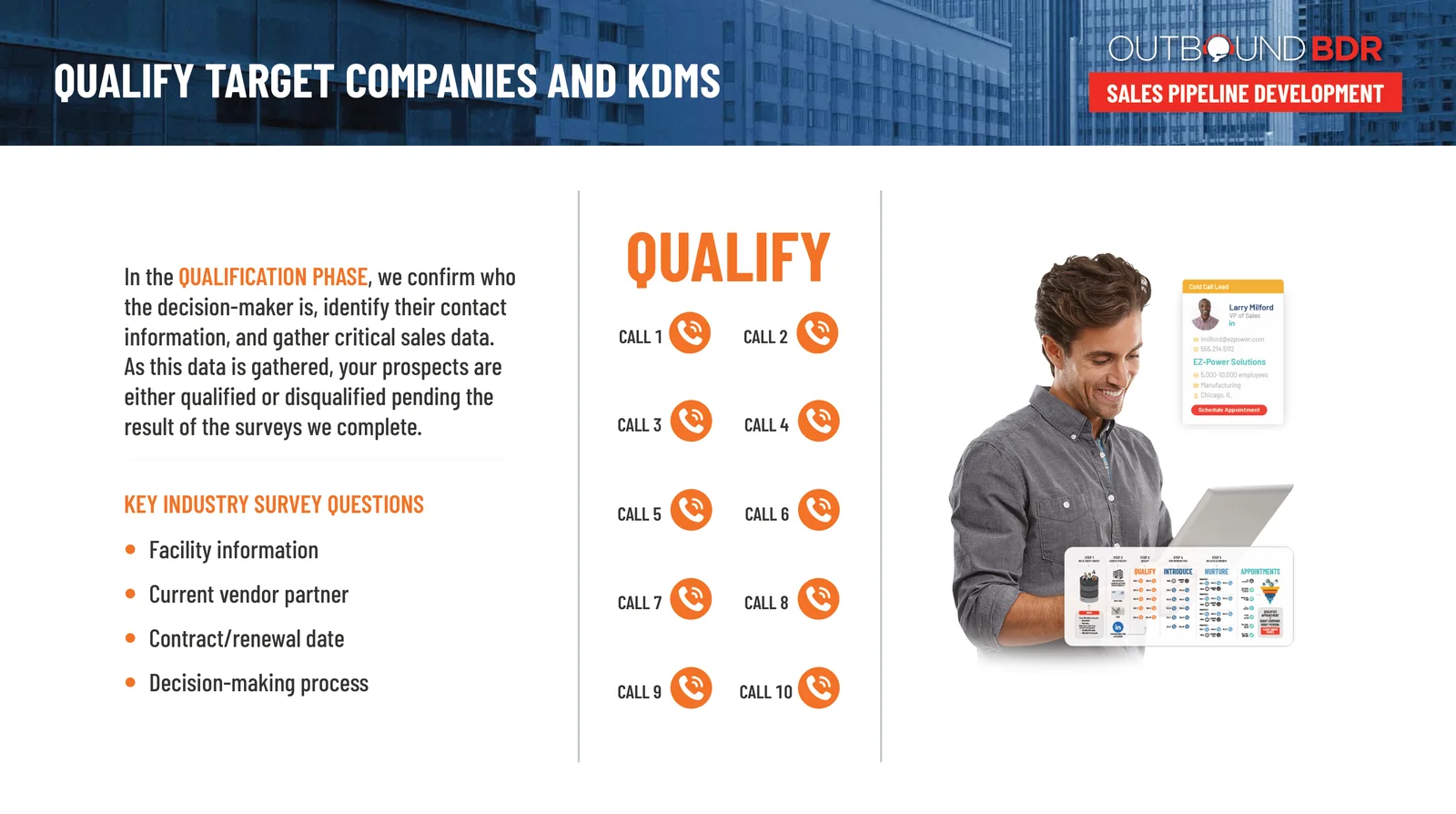
Next is qualification, the research most teams skip. Across a structured sequence of up to ten calls, we confirm who the real decision-maker is, get their direct contact information, and complete a short industry survey: facility information, their current vendor, when their contract renews, and how they make decisions. That intelligence goes straight into your records. Your closers never waste time on a company that was never going to buy, and you learn when each prospect is likely to be ready.
-
 Slide 9 of 13
Decision-maker introduction
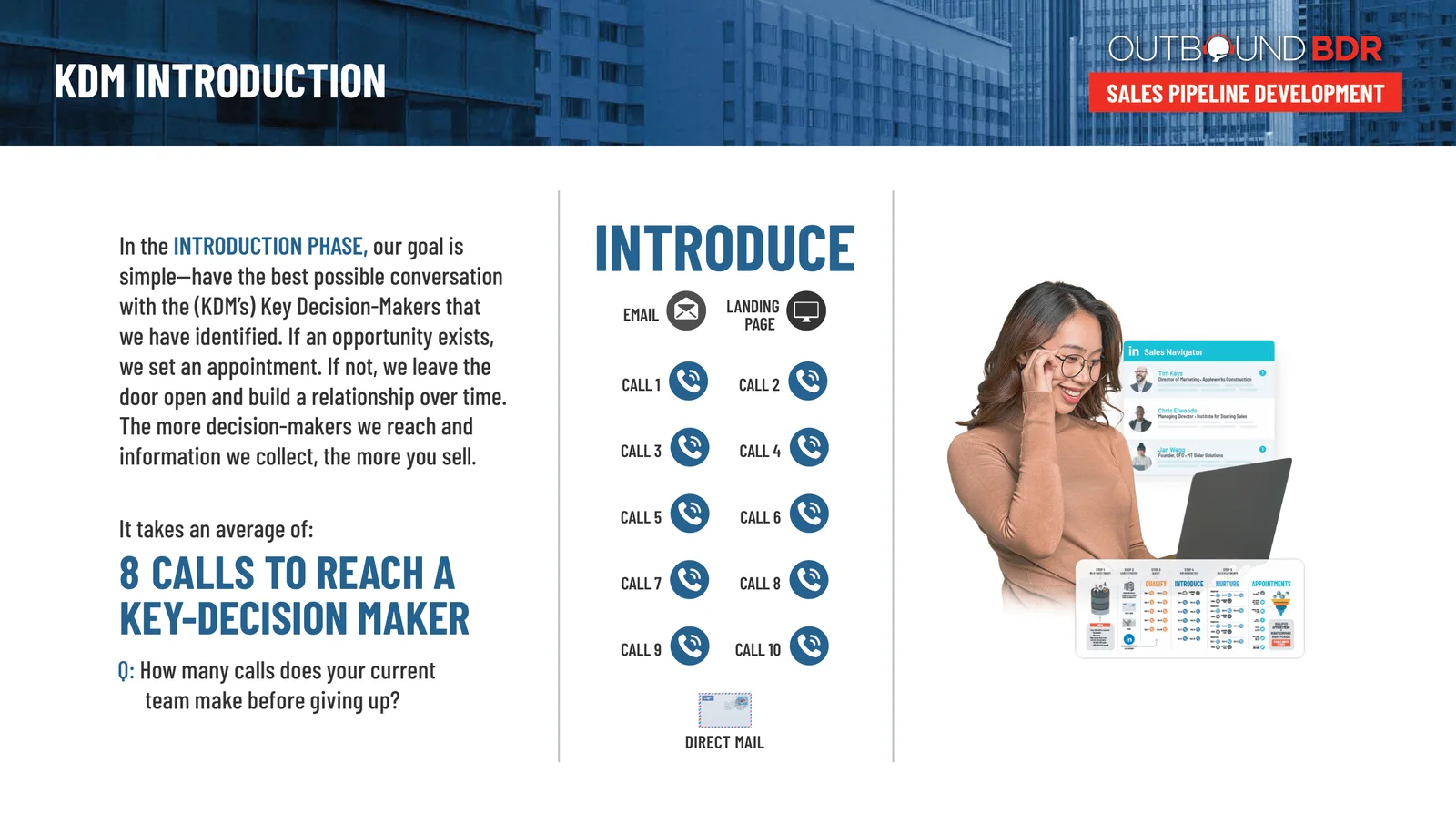
Now we have qualified companies and the right person at each one, and the real work begins. It takes an average of eight calls just to reach a key decision-maker, and most teams quit after two or three. We don't. When we reach them, we have the best possible conversation. If an opportunity exists, we set the appointment. If not, we leave the door open and keep building the relationship. How many calls does your team make before giving up?
-
 Slide 10 of 13
Nurture qualified companies
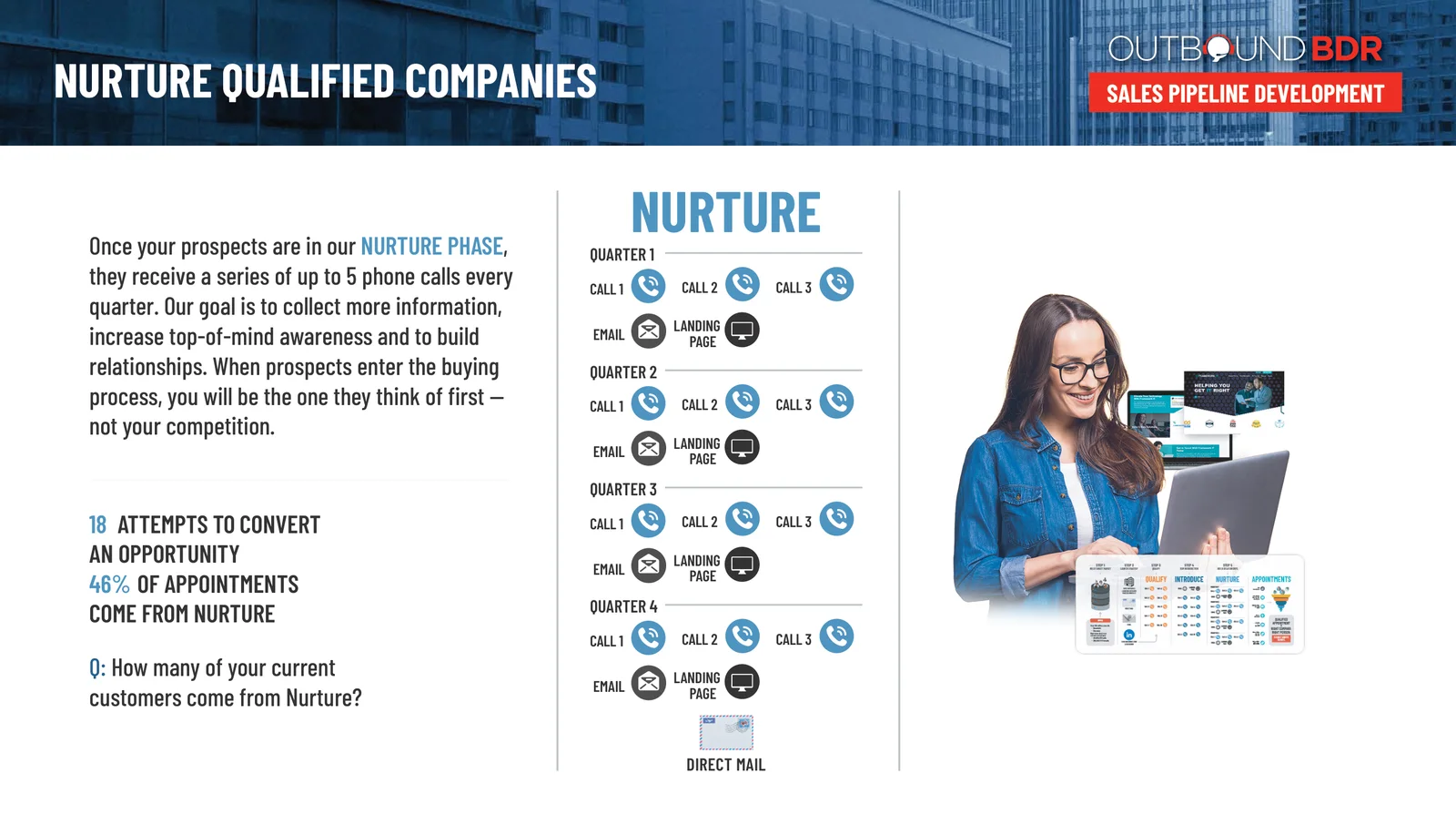
Most decision-makers aren't ready the day we reach them. They're interested, with a caveat: call me when my contract's up, or I need to talk to my partner. So every quarter, qualified prospects get up to five calls, plus email and a landing page, to stay top of mind. It can take 18 attempts to convert an opportunity, and on this slide, 46 percent of appointments come from nurture. When those buyers are ready, you're the company they think of first.
-
 Slide 11 of 13
New sales appointments
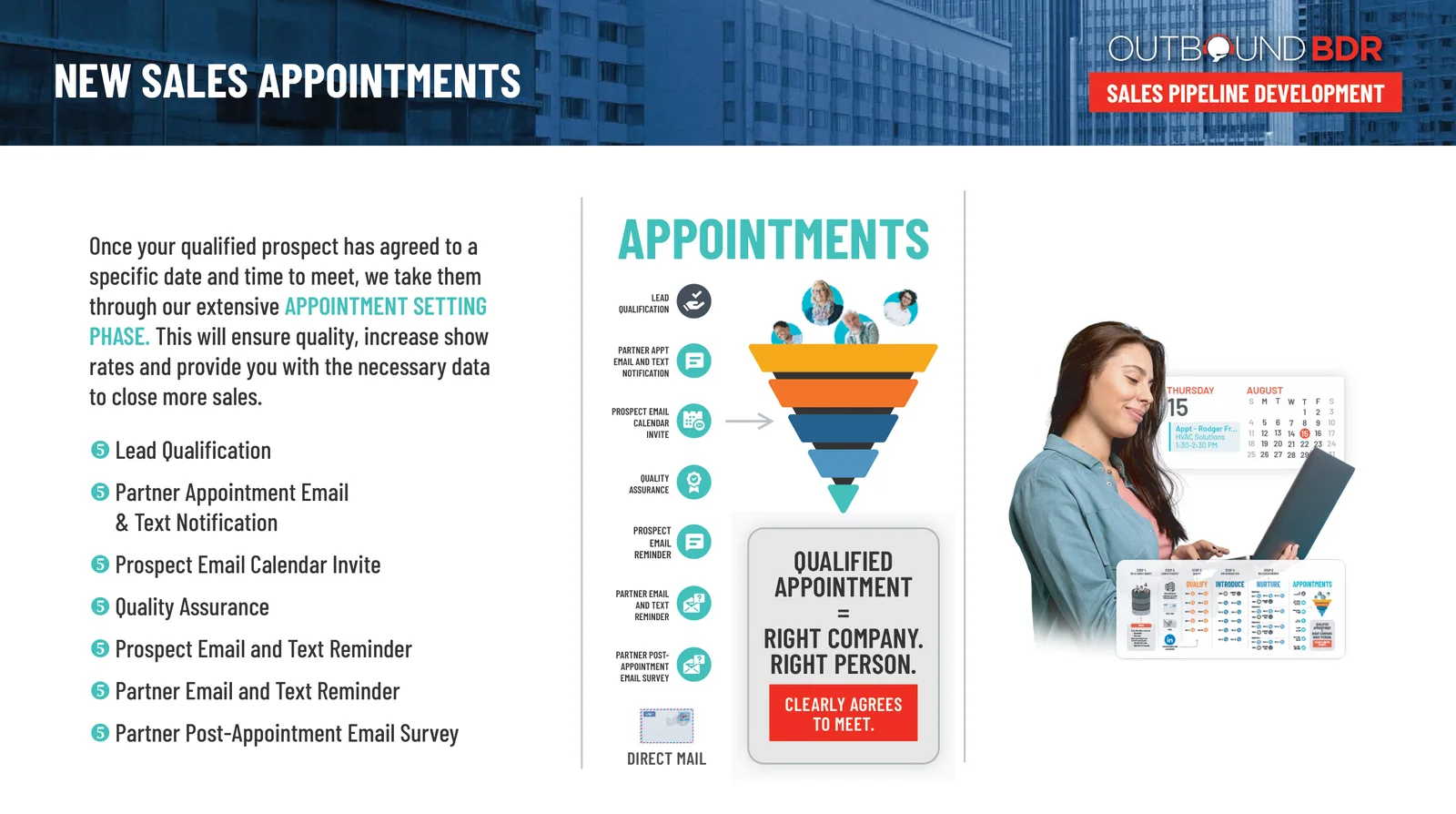
When a prospect agrees to meet, we pass the baton cleanly. We qualify the lead, send you the appointment by email and text, put the calendar invite in front of the prospect, run a quality assurance check, send reminders to both sides, and follow up with a survey afterward. The result is a qualified appointment: the right company and the right person, who clearly agreed to meet. Not a lead, not a maybe. Your job is to close.
-
 Slide 12 of 13
Team and technology
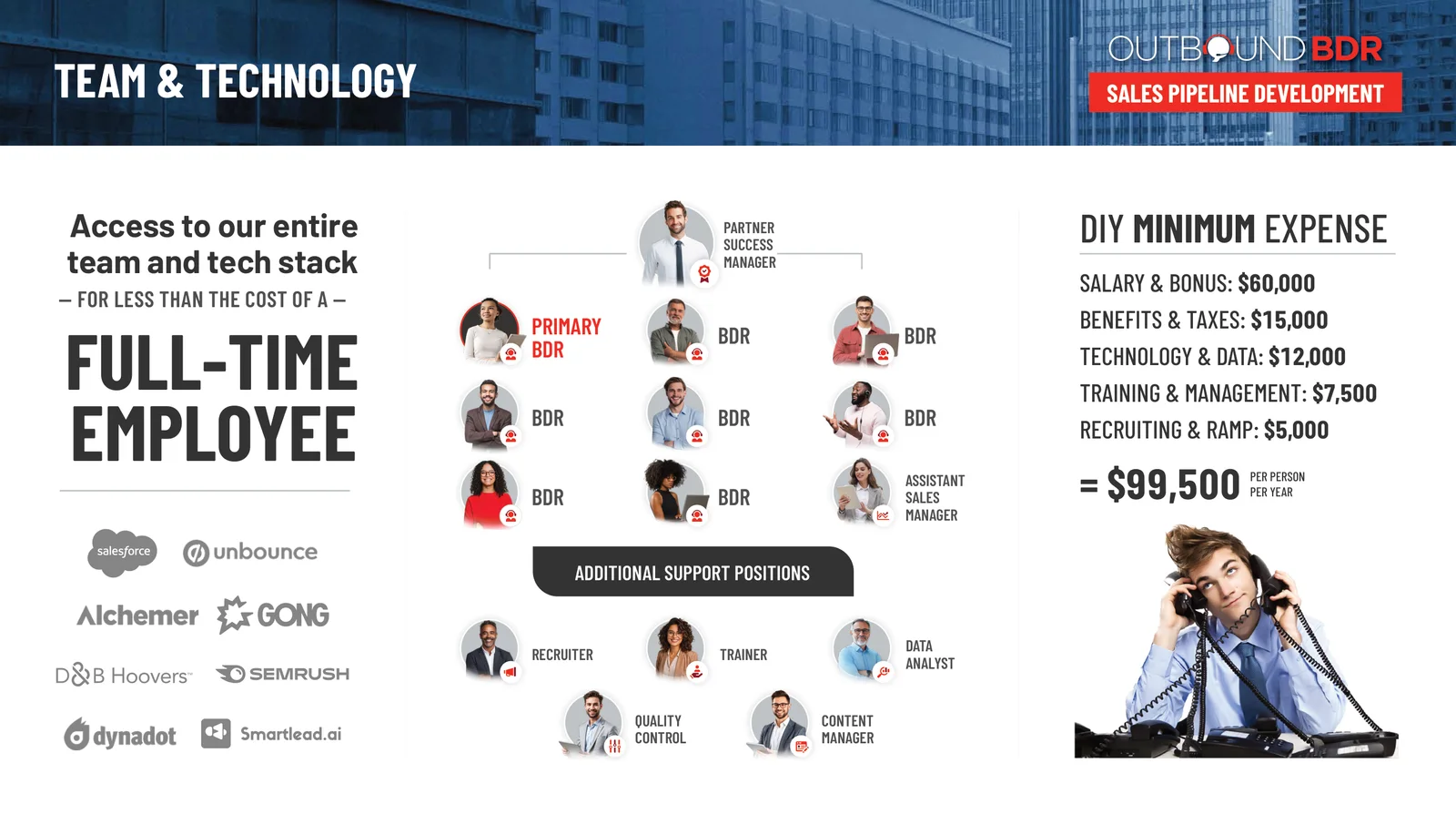
This is what you actually get: not one hire, a whole team. A partner success manager who owns your account, a primary BDR and a team of BDRs, an assistant sales manager, and a support bench of recruiting, training, quality control, content and data. Plus the full tech stack, including Salesforce, ZoomInfo and Gong. Compare that to building it yourself: by this slide's math, one in-house rep runs about 99,500 dollars a year in salary, benefits, technology, training and recruiting, and can quit in six months.
-
 Slide 13 of 13
Results portal
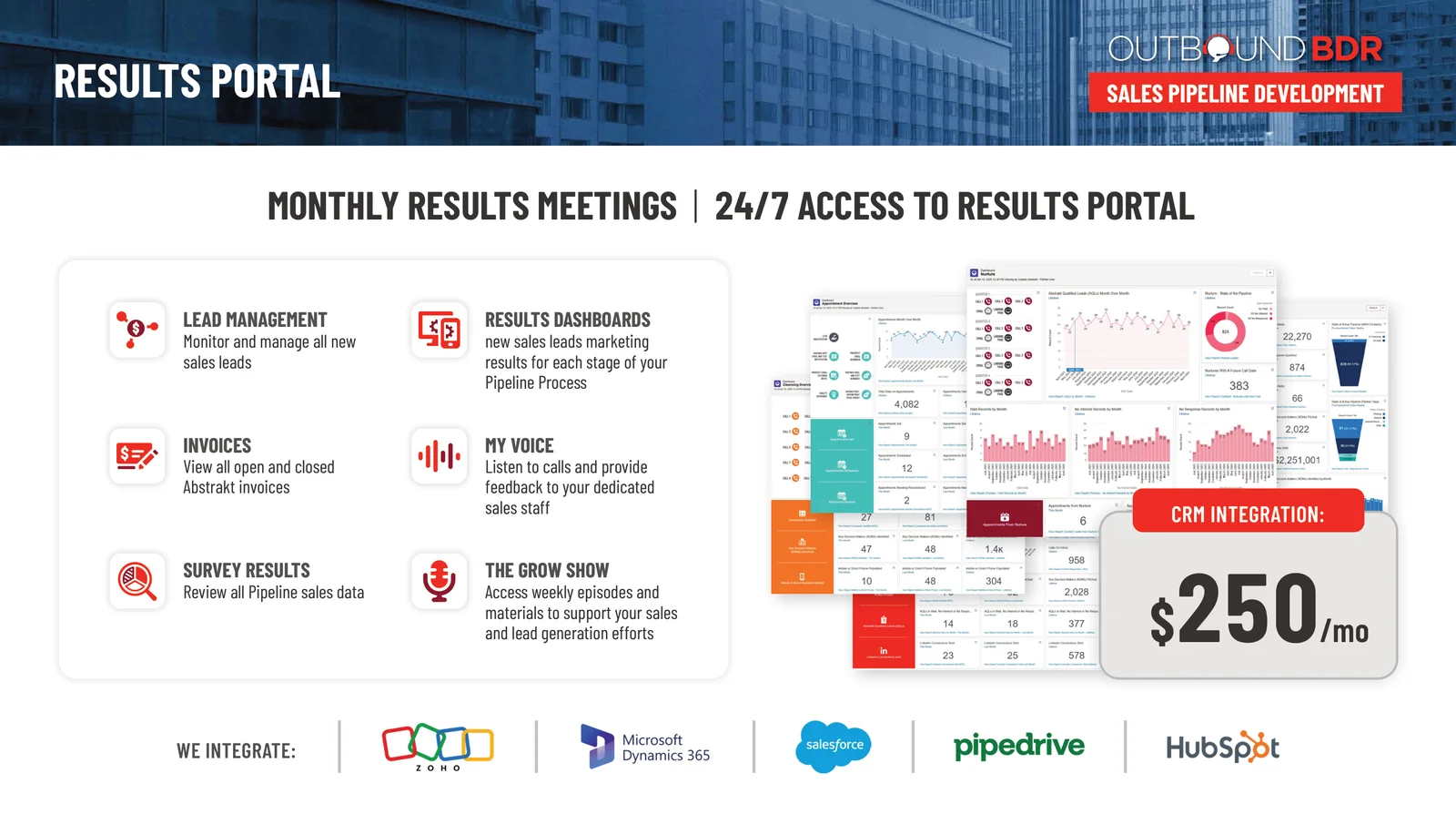
You're never in the dark. The Results Portal gives you lead management, results dashboards for every stage, your invoices, survey results, and My Voice, where you can listen to the real calls made on your account. It also includes The Grow Show, weekly episodes to sharpen your own team. We meet monthly to walk through your results, and we integrate with Salesforce, HubSpot, Pipedrive, Zoho and Microsoft Dynamics, so nothing about your program is a black box.

Questions? Ask Ava, live.
Talk or type. Ava has every slide, your details and our case studies, so she can answer about your market, your program or anything we covered.
Is your market still open?
We take one client per trade per territory. Check yours in seconds, or talk it through with a strategist.
Getting Ava ready…
AI video guide. Your voice is processed by Tavus to run this conversation; we never use your camera. Calls end after 5 minutes. Privacy