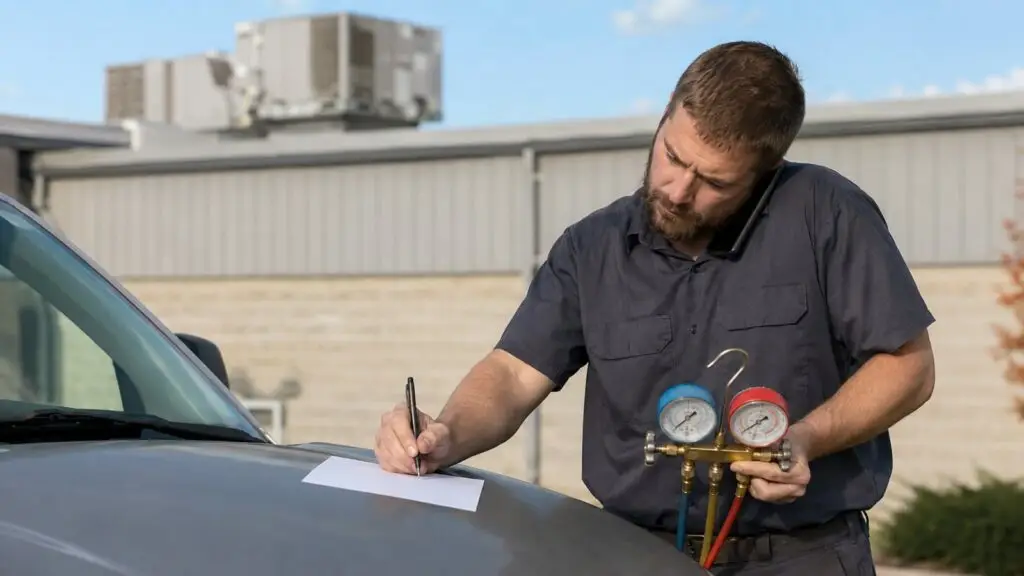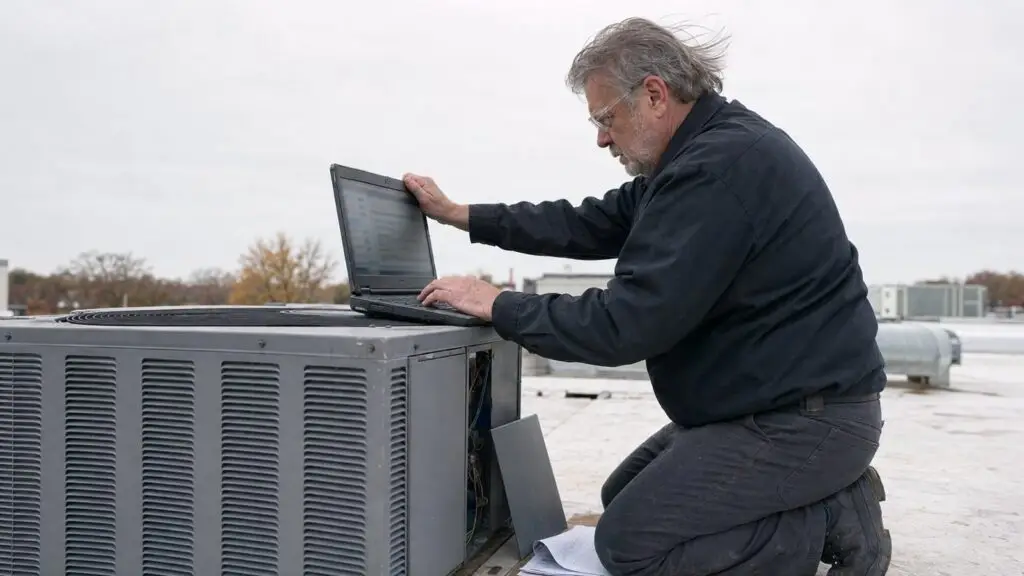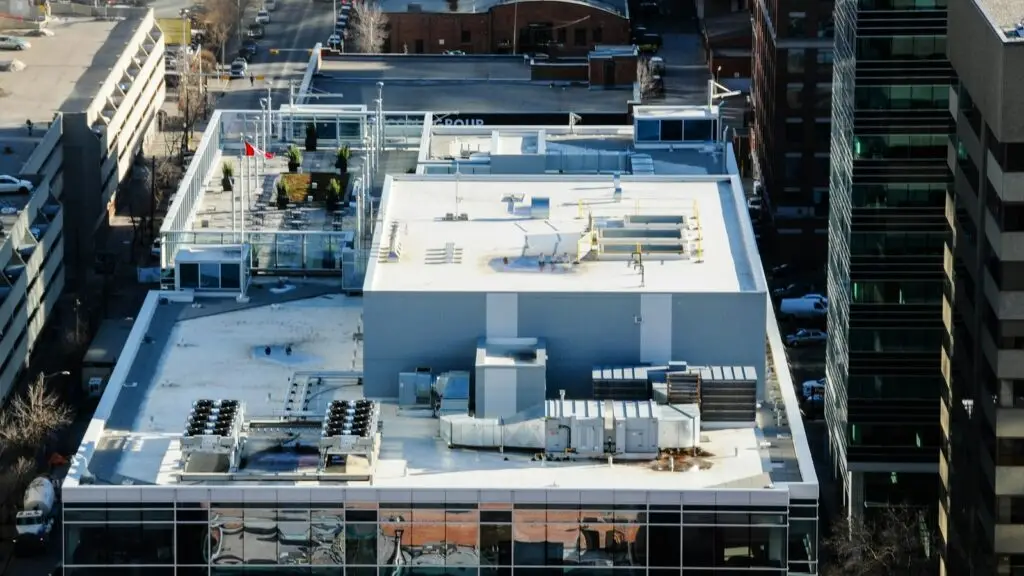
You can’t walk every building in the county. The work comes from picking the right twenty and scoring them before anybody makes a call.
A commercial HVAC contractor has two estimators, a service schedule that doesn’t pause because somebody is building a budget, and roughly eight weeks of useful capacity to spend on buildings that aren’t already customers.
Twenty is the number because twenty is what one estimator can visit, write up and follow up on inside that window while still running the rest of their week. The question is which twenty.
In short
- Equipment age is the strongest signal, and the number most contractors use for it’s wrong.
- Score buildings on four things before anybody dials: equipment age, building type, who owns it, and what is visible from the ground.
- Twenty walked and written up beats two hundred called. The list is the work.
The equipment age number most contractors get wrong
Ask around and you’ll hear that a rooftop unit lasts about fifteen years. It gets repeated in trade press, in manufacturer literature and across every contractor forum, and plenty of estimators use it as the cutoff for deciding whether a building is worth the drive, which makes it worth actually checking.
ASHRAE maintains a public service life database built from surveyed equipment in real buildings. Query it for packaged rooftop DX units and the picture is more useful than the rule of thumb.
16 years
Median age of packaged rooftop DX units currently in service, across 215 units in the database.
22 years
Median age at which rooftop units in the same dataset were replaced.
Read those two numbers together. Half the rooftop equipment running right now is already older than the fifteen years everybody quotes, and the units that actually came off buildings had been up there considerably longer than that.
One caveat worth stating plainly: the replaced sample is small, five units, so treat twenty-two as an indication and not a hard figure. The in-service sample is much larger and the median of sixteen is solid.
What that changes is your scoring. A fifteen-year-old unit isn’t a building in trouble, it’s an ordinary building. The properties worth your eight weeks are the ones carrying equipment past twenty, because that’s where the dataset says replacement actually happens.
Four signals that mechanical work is coming
01
Equipment age
Visible from a satellite view and confirmed by a nameplate. Past twenty is a strong signal. Mixed ages on one roof is a stronger one, because it means somebody has been replacing units individually as they fail.
02
Building type
Where comfort is part of the product. Medical, hospitality, retail and anything with a server room escalates faster than a warehouse, because a failure has an audience.
03
Ownership
Owner-occupied decides faster than a leased building where the landlord and the tenant argue about who pays. Institutional owners have the most predictable process and the slowest one.
04
Visible need
Portable units in a lobby. Propped doors. A window unit in a commercial building. These are somebody solving a mechanical problem badly, in public.
None of the four requires a phone call. That’s the point. All of the scoring happens at a desk, before anybody spends a minute of selling time on a building that was never going to buy anything.
Score them before you call
| Signal | 2 points | 1 point | 0 points |
|---|---|---|---|
| Equipment age | Past 20 years, or visibly mixed ages | 15 to 20 years | Under 15, or recently replaced |
| Building type | Medical, hospitality, data, food | Office, retail, school | Warehouse, storage, light industrial |
| Ownership | Owner-occupied | Institutional or single landlord | Multi-tenant with split responsibility |
| Visible need | Portable units, propped doors, complaints online | Aging roof, deferred look to the property | Nothing visible |
Score every candidate out of eight. Walk the sixes and above, in descending order, until the eight weeks are used. Everything else goes on next quarter’s list with its score already attached, which is the part that compounds.
Fill the twenty
Abstrakt sets appointments with the facility managers, property managers, and owners who approve mechanical spending, so your estimators spend their eight weeks walking roofs instead of building lists. The walkthrough, the number, the proposal, and the contract are yours.
Building the list without buying one
Most of this is desk work. None of it requires a subscription.
Satellite imagery shows rooftop equipment, how much of it there’s, and whether it looks like one generation or four. County assessor records give the owner, the year built and the square footage. A property management company’s own site lists the buildings it runs, which turns one relationship into a portfolio. Your service history is the best source of all, because you have already been on some of these roofs.
Add the buildings nobody else is scoring: the ones where a competitor’s sticker is on the unit but the unit is old. A maintained twenty-two year old rooftop is still a twenty-two year old rooftop.
“I was on the roof next door and noticed your units look like they’re from the original build. Would it be useful if I put the ages and a replacement range on one page for you? No charge, and no obligation to use us.”
When twenty is the wrong number
Twenty assumes one estimator with other duties. If you have three estimators and a dedicated one, the number is larger. If your estimator is also your best service technician during a heat wave, the number is smaller and pretending otherwise produces a list nobody works.
The discipline matters more than the figure. Pick a number you’ll actually complete, score more candidates than that, then walk them strictly in score order. A list of twenty that gets finished beats a list of eighty abandoned at nine.
Frequently Asked Questions
How long does a commercial rooftop unit actually last?
Longer than the fifteen years commonly quoted. In ASHRAE’s public service life database, packaged rooftop DX units currently in service have a median age of 16 years across 215 units, and the units recorded as replaced had a median age of 22. The replaced sample is only five units, so treat that figure as indicative.
How do you know a building’s rooftop units need replacing?
Age from the nameplate, and the pattern on the roof. Units of visibly different ages mean somebody has been replacing them one at a time as they fail, which is the most expensive way to own equipment and the easiest case to make for a planned replacement.
How do commercial HVAC contractors find leads without buying them?
Satellite imagery for rooftop equipment, county assessor records for ownership and year built, property management company websites for portfolios, and your own service history. Score what you find, then walk the highest scores.
Which buildings budget for replacement instead of patching?
Owner-occupied buildings, and building types where comfort is part of what the business sells. Medical, hospitality, food and anything with critical equipment escalate faster, because a failure is visible to customers. Multi-tenant properties with split responsibility are the slowest.
Why twenty buildings?
Because it’s roughly what one estimator with other responsibilities can walk, write up and follow up on in eight weeks. The number isn’t sacred. Pick one you’ll finish.
Should you approach a building that already has a service contractor?
Yes, if the equipment is old. A competitor’s sticker on a twenty-two year old unit tells you somebody is maintaining aging equipment, not that the replacement decision has been made. Score the building on its equipment, not its incumbent.
Keep going
- HVAC lead generation
- What goes in a one-page HVAC walkthrough summary
- Best HVAC lead generation companies
- Commercial construction leads before the bid
- Outsourced SDR services
About this article
Jeff Winters is Chief Executive Officer at Abstrakt. Reviewed by Neil Erker, Chief Marketing Officer. Abstrakt sets appointments for commercial HVAC contractors and the rest of the trades, and the patterns here come from that calling.

Abstrakt is a technology-enabled outsourced sales development company that books 100,000+ meetings a year for 1,500+ clients.